
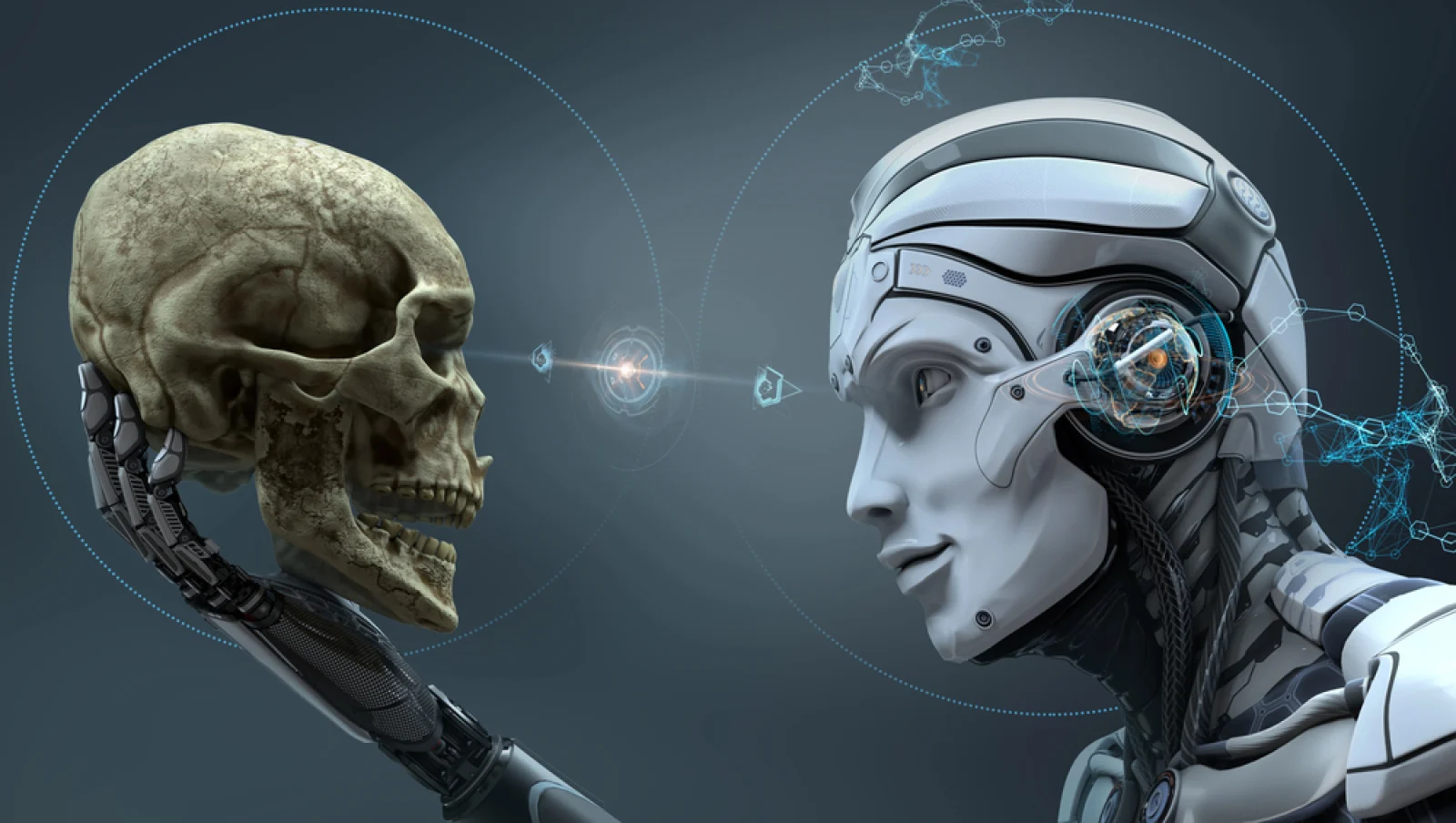
Former Ripple engineer and current Anthropic researcher Evan Hubinger has estimated that there is a greater than 10% chance that artificial intelligence (AI) could wipe out humanity within the next decade.
Hubinger made the comment while responding to former Anthropic researcher Jacob Coxon. The latter announced his resignation from the AI company on Wednesday after accusing the industry’s leading laboratories of racing toward self-improving superintelligence without adequate safeguards.
"Jacob is correct here—we really do earnestly believe AI could kill all humans!" Hubinger wrote on X. "I personally think it is >10% within the next decade."
Hubinger stressed that his estimate was not an accusation that Anthropic was ignoring the problem altogether.
"I believe Anthropic is trying its best, but we do not yet have a plan to solve alignment for superintelligence and are not clearly on track to," he said.
The somewhat sensationalist warning has attracted a lot of attention because Hubinger works directly on the problem he is warning about. At Anthropic, his job is alignment stress-testing, which means that he is currently monitoring how safety techniques could fail in the realm of AI.
"Gambling with our lives"
Coxon said that neither OpenAI nor Anthropic is acting responsibly.
"Neither company is acting responsibly," he wrote. "They are racing straight to self-improving superintelligence and gambling with our lives."
Frontier systems might soon gain an ability to exert meaningful influence outside controlled environments, according to Coxon.
"These will soon be superhuman systems that can hack anything, revolutionize any field overnight, and acquire real power and resources," he said.
Major laboratories are not properly disclosing AI-related risks to the public, according to Coxon.
Coxon nevertheless said he remained optimistic that major AI laboratories could coordinate to slow the race.
The warnings from Hubinger and Coxon have arrived just days after OpenAI and Anthropic released some of the most powerful models.
OpenAI unveiled GPT-6 Astra on Sept. 3, which Nvidia CEO Jensen Huang has described as the advent of superintelligence.
In the meantime, Anthropic introduced Claude Fable 5.1 and Claude Mythos 5.1. These are the company's most advanced models for coding and scientific research.
Ripple and Interledger
Before becoming one of the more prominent researchers working on AI alignment, he spent roughly a year as a software engineering intern at Ripple between June 2014 and August 2015.
Hubinger worked on the early design of Interledger, a protocol intended to allow payments to move across different ledgers and currencies.
Hubinger later moved toward theoretical computer science and AI safety, including work at the Machine Intelligence Research Institute.
Ripple's stance on AI
As reported by U.Today, Ripple CEO Brad Garlinghouse has stated that the company had been adopting AI "aggressively," predicting that it could boost growth. Garlinghouse admitted that his AI optimism was somehow contrarian.
"I have a somewhat contrarian view on some of this," Garlinghouse said during an appearance at the SALT Wyoming conference.