News Center




Aave V4 Launches Its First Externally Curated Lending Markets with Sentora
 RLUSDAave V4Sentora





Figure Urges US Treasury to Adopt Malaysia's 24/7 Bond Platform Model
Figure co-founder Mike Cagney is calling on the US Treasury to look to Malaysia's 24/7 tokenized bond platform as a model. Bank Negara Malaysia's SSDS+ system separates tokenized bond ownership records from central bank money settlement, enabling round-the-clock settlement. Cagney argues that a similar approach in the US could lower Treasury issuance and registration costs while attracting more buyers, though he offered no cost estimates. Figure itself is pushing native onchain issuance across networks including Provenance, Solana, Stellar, and Base.
 SOLcentral bank settlementblockchain issuancetokenized bonds
2026-10-21
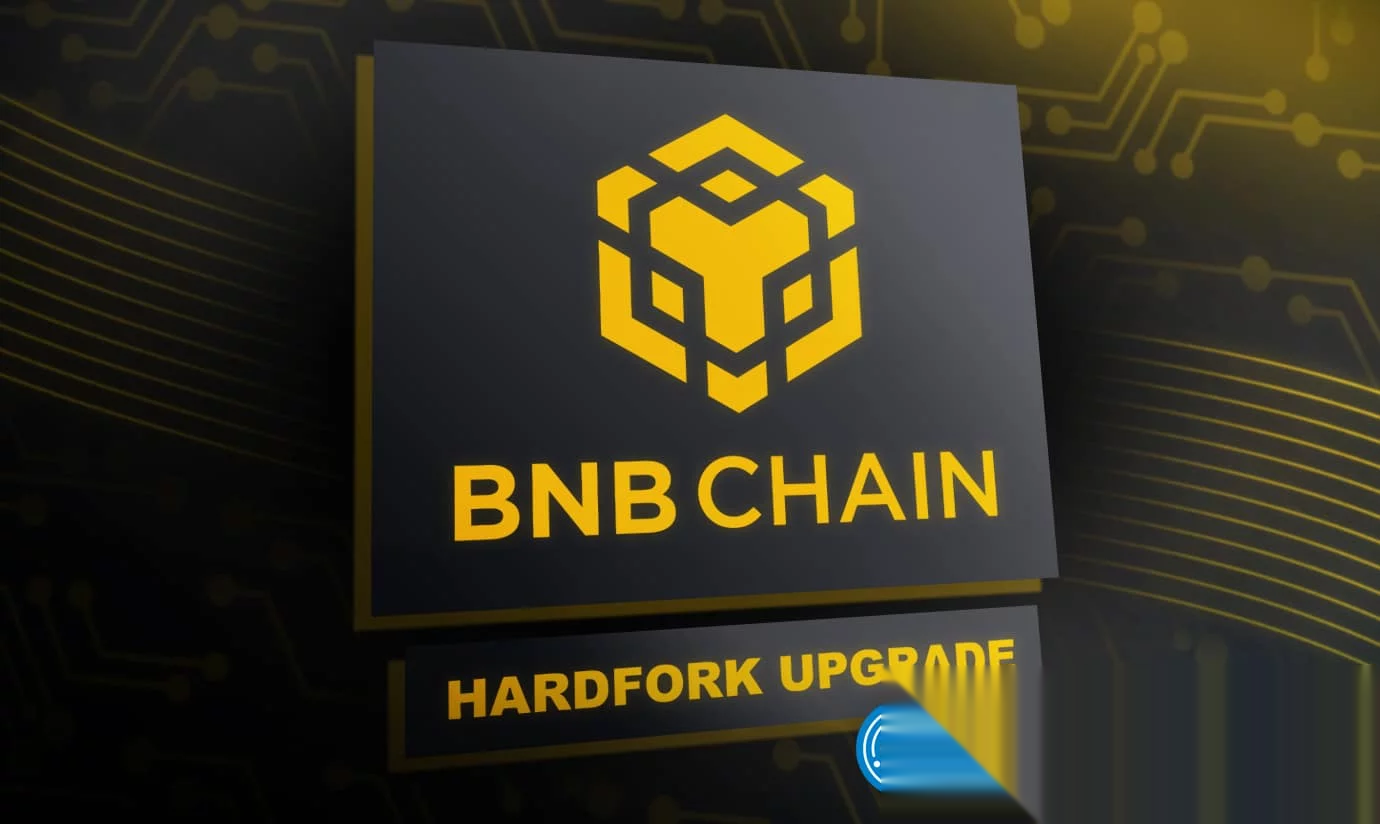
BNB Standard to Ring Nasdaq Opening Bell on October 26 Under New CEO
BNB Standard Corporation (Nasdaq: BNC) announced it will ring the Nasdaq opening bell on October 26 to mark its rebranding and the appointment of Alex Odagiu as its new CEO. Formerly CEA Industries, the company officially adopted the BNB Standard name on September 29 following a community advisory vote, while keeping its BNC ticker. Odagiu took over as CEO on October 19 after a board reshuffle resolved a governance dispute with YZi Labs. The company plans to run its own validator node on BNB Chain to grow its treasury holdings and build operations around the network.
 BNBCEO appointmentBNB StandardBNB Treasury
2026-10-21

Upbit Operator Dunamu Taps MoonPay for Stablecoin Payments
Dunamu, the company behind South Korean exchange Upbit, has signed an exploratory partnership with payment infrastructure firm MoonPay to pursue three areas: stablecoin cross-border payments, digital asset infrastructure for corporate treasury management, and expanding the GIWA blockchain ecosystem into overseas markets. The two will combine MoonPay's global payment network with Dunamu's blockchain capabilities to assess enterprise-focused cross-border transfer and fund flow solutions. The partnership remains exploratory, with no financial terms, launch timeline, or specific stablecoins disclosed.
2026-10-21
XRP Slips Below $1.32 as Analyst Identifies $1.25 as Potential Rebound Zone
XRP has dropped below $1.32, with its daily RSI falling to 36.84 near the lower Bollinger Band at $1.3077. Analyst Ali Martinez points to $1.25 as a key support level, with a possible bounce to $1.42 or $1.60 if it holds. The article also notes US September CPI rose 3.7% year-over-year, up from 3.4% in August, drawing market attention. CoinGlass data shows liquidation clusters around $1.39 and $1.43. Technicals remain weak, though not yet oversold.
 XRPLiquidation ClustersXRP Price AnalysisBollinger Bands
2026-10-15
These 4 Altcoins Are Flashing Buy Signals: Time to Buy the Dip?
The article examines TD Sequential buy signals that have appeared on XRP, SOL, DOGE, and HYPE after recent declines. Analyst Ali Martinez notes XRP showing three buy signals near $1.31 with upside targets of $1.40 and $1.50, SOL approaching $100 support with possible rebounds to $111 and $120, and DOGE testing $0.080 support with eyes on $0.087 and $0.094. The signals come as U.S. September CPI rose 0.6% versus expectations, pushing annual inflation to 3.7% and weighing on markets. The article explores whether these coins are worth buying on the dip.
XRPsupport levelsTD SequentialPrice Rebound2026-10-15

Stablecoins as Cash Equivalents: What the FASB Might Change
The FASB is weighing guidance that would let qualifying stablecoins be classified as cash equivalents under current U.S. GAAP. The proposal does not declare stablecoins to be cash, nor would it automatically qualify USDC, USDT, or all dollar-pegged tokens. Instead, it clarifies how the existing cash-equivalent definition applies when a digital asset has adequate reserves, reliable redeemability, and a qualifying contractual right to redemption. If adopted, this accounting treatment could make stablecoins more usable for corporate treasury and cross-border settlement, though issuer, reserve, redemption, blockchain, and regulatory risks remain.
 USDCStablecoin AccountingCorporate TreasuryCash Equivalents
2026-10-13
Solana Treasury Firm DeFi Development Keeps Buying SOL as CHAD Preferred Stock Hits Record
Nasdaq-listed Solana treasury company DeFi Development Corp added roughly 22,070 SOL and equivalents last week, bringing its total holdings to about 2.586 million SOL worth around $287 million. Its CHAD perpetual preferred stock hit an all-time high near its $10 par value in the week ending October 9, after pricing at $8 in its September IPO with a 13% annualized dividend yield. The company funds SOL purchases by selling new CHAD shares through a $300 million ATM program, though weekly buying has steadily shrunk. DFDV's common stock has a market cap of about $144 million, below the value of the SOL it holds.
SOLdigital asset treasurySOL accumulationPreferred Stock2026-10-12
2026 Nobel Economics Prize Honors a New Foundation for Macroeconomic Policy
Robert E. Hall and Michael Woodford won the 2026 Nobel Prize in Economics for laying the microeconomic foundations of macroeconomic stabilization. Their New Keynesian framework rebuilt Keynesian arguments for government and central bank responses to recessions and inflation, starting from household consumption decisions, sticky firm pricing, and expectation formation. Hall showed consumption depends not only on current income but on expected future income; Woodford clarified how interest rates, inflation, and expectations transmit. Central banks now widely use the framework to assess rates, inflation, unemployment, and economic shocks.
2026-10-12
Why Are Memory Chip Stocks Falling Despite Strong AI Demand?
This article examines why memory chip stocks have tumbled even as AI demand remains robust. Micron dropped 4.8%, and Samsung Electronics closed lower despite forecasting record quarterly profits. Key factors include: high valuations that already priced in record earnings and AI demand, with investors now demanding proof the profit cycle can extend beyond 2027; rising U.S. Treasury yields and oil prices compressing tech valuations by raising discount rates; and higher AI infrastructure financing costs making investors more selective. The article also notes the memory market is splitting into two distinct cycles—AI-related memory and consumer-grade memory—with enterprise SSD demand staying strong.
2026-10-12
Solana Treasury Firm SkyAI Offloads 1 Million SOL to Fund $201M Share Buyback
Nasdaq-listed Solana treasury company SkyAI has sold roughly 1 million SOL — half its reserves — to bankroll a buyback of up to $201 million. The firm plans to repurchase up to 95% of outstanding shares and warrants at $3 each, with the tender offer expected to launch around October 15. On-chain analyst Ember reports another 211,623 SOL moved to Coinbase Prime, bringing total disposals to about 1.25 million SOL (~$138 million) over five days. SkyAI also rejected Forward Industries' unsolicited takeover bid, calling it undervalued.
SOLSolana TreasuryCoinbase PrimeShare Buyback2026-10-12