In brief
- Annual MENA blockchain transactions reached an estimated $350 billion by 2025–2026, up from about $100 billion in 2022.
- The institute says the Iran conflict pushed a growing share of regional capital into digital assets.
- Investors shifted toward Bitcoin after an initial sell-off, while Gulf crypto firms continued operating during the fighting.
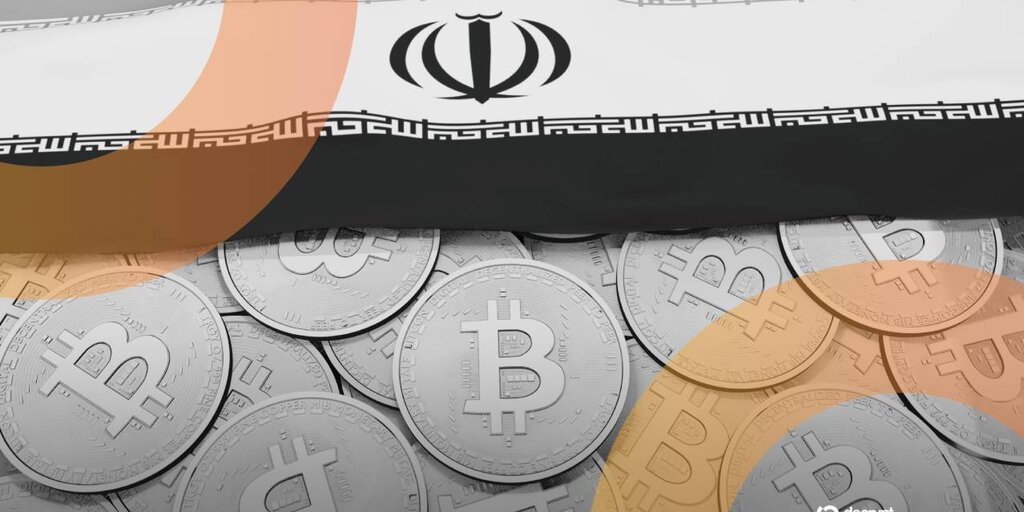
The Iran conflict is pushing a growing share of regional capital into digital assets as investors seek to preserve wealth and move money during disruption, according to the Bitcoin Policy Institute.
In a report published Friday, the group estimates that annual blockchain transaction value across the Middle East and North Africa reached $350 billion by 2025–2026, more than triple the approximately $100 billion recorded in 2022.
Regional conflicts tend to accelerate capital outflows,” researchers for the institute wrote. “The Iran conflict displayed a different dynamic: instead of exiting the region, a growing share of capital shifted into digital assets, underscoring the increasing role of cryptocurrencies—and Bitcoin in particular—as a hedge against economic and geopolitical uncertainty.”
While the institute attributes the broader growth to economic pressures and government efforts to develop crypto markets, it argues that the fighting has increased demand for financial alternatives and demonstrates the benefits of markets that remain open during disruption.
Bitcoin initially fell alongside other risk assets after fighting broke out between Israel and Iran in June 2025.
“Rather than behaving as an immediate safe-haven asset, Bitcoin initially traded in line with global equity markets as investors adopted a classic risk-off posture,” the report says.
Investors then moved from riskier cryptocurrencies into Bitcoin, pushing its share of the crypto market to a one-month high of 64.8%, according to the institute. Its price stabilized despite continued fighting.
The institute says investors moved toward Bitcoin to protect their money from the economic fallout of the conflict, including higher oil prices, inflation and interest rates. Helping matters is the fact that crypto markets also stayed open around the clock, while traditional markets were closed.
The report identified several countries, including Egypt, Turkey, Lebanon and Iran, as countries where currency depreciation has also encouraged people to use Bitcoin and stablecoins pegged to the U.S. dollar to preserve purchasing power.
“Rather than slowing regional adoption, the episode highlighted the growing divergence within MENA,” the report said. “In countries experiencing sanctions, conflict or currency instability, cryptocurrencies served as a means of preserving wealth and transferring value outside traditional financial systems, while regulated Gulf markets continued to attract institutional capital and strengthen their position as the region's leading centers for digital assets.”
BitcoinBTC · USD
$79,142−0.97%
06:30 PM12:30 AM06:30 AM12:15 PM06:15 PM
$80.4k$79.8k$79.3k$78.8k
24h HighHigh$80,494
24h LowLow$78,707
VolVol$908.0M
Market projectionsOdds by Myriad
Price data by CoinGeckoCoinGeckoMore Bitcoin news and projections →
The Bitcoin Policy Institute did not immediately respond to a request for comment by Decrypt.
More recent activity in Iran shows how quickly funds can move after an attack. Chainalysis tracked roughly $10.3 million leaving Iranian crypto exchanges between February 28 and March 2 this year, following U.S.-Israeli airstrikes. The firm cautioned that those transfers could include personal withdrawals, exchanges managing liquidity, or state-linked actors moving assets.
The report also points to the UAE and Bahrain’s efforts to attract crypto firms and institutional investors by establishing regulatory frameworks for the industry.
In May, Kraken parent company Payward said it had received preliminary authorization from Dubai’s Virtual Assets Regulatory Authority for broker-dealer and investment management activities.