News Center





Robinhood Chain Hits $1.14B TVL as Morpho Opens Stock-Token Loans
 USDGRobinhood ChainStock TokensMorpho







Bybit Secures Dubai Spot Trading Licence, Pursues Derivatives Approval
Bybit announced that its Dubai entity, Bybit Fintech FZE, has obtained a Virtual Asset Service Provider (VASP) licence from Dubai's Virtual Assets Regulatory Authority (VARA), allowing it to offer spot trading services to retail, qualified, and institutional investors. The licence covers exchange services only, with derivatives requiring separate approval. Bybit called this a key step in deepening its Dubai headquarters presence and plans to seek a derivatives licence separately. In 2026, the exchange also secured five licences or regulatory approvals in other international markets.
4 hours ago

South Korea's Crypto Bill Nears Final Talks as 2027 Tax Deadline Looms
South Korea's Digital Asset Basic Act is in final negotiations, with FSC Chair Lee Eok-won pledging to push legislation forward soon but giving no official submission date. Lawmakers argue crypto taxation shouldn't begin before the regulatory framework is complete, calling for delays or repeal. The proposed 22% crypto gains tax remains set to take effect January 1, 2027, after three postponements. The tax agency is preparing further guidance as the government reviews industry concerns. The bill is expected to cover exchange licensing and stablecoin issuance rules.
5 hours ago

The GENIUS Act Rules Are Final—But Can Stablecoin Issuers Get Approved in Time?
The OCC has finalized its stablecoin rules under the GENIUS Act, set to take effect on January 18, 2027, yet the application window has not opened. Existing issuers that want to keep operating under the new regime must file a substantially complete application and may seek a waiver of up to 12 months. A waiver requires a pending application and is not granted automatically. The key question for issuers has shifted from reserve requirements to whether they can file, be accepted, and secure a written waiver in time—and the OCC has yet to announce when it will begin accepting applications and waiver requests.
6 hours ago
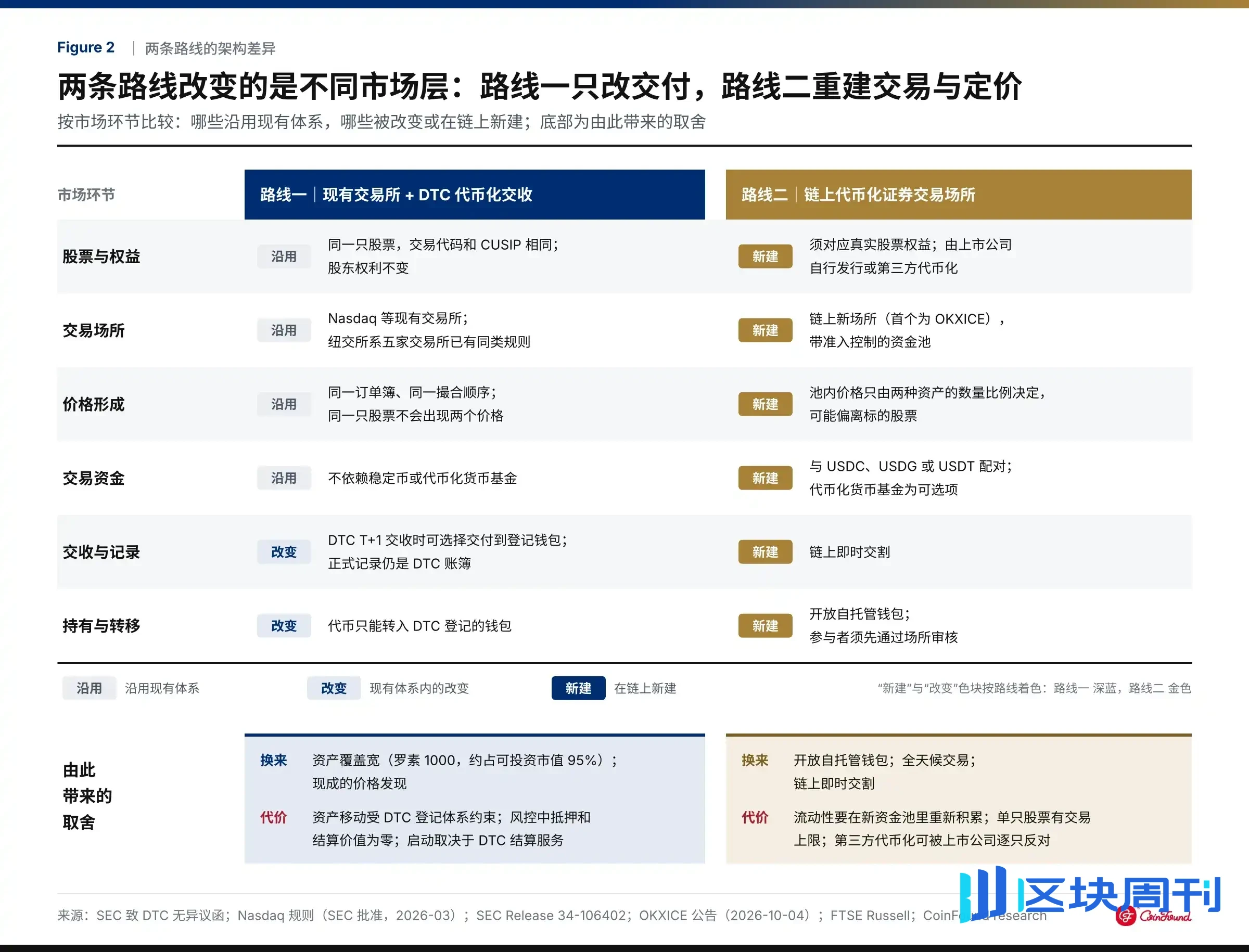
Two New Architectures for Tokenizing US Stocks
This article analyzes two emerging architectures for bringing US stocks on-chain. Route one integrates tokenized equities into the existing Nasdaq order book and DTC settlement system, changing only the post-trade delivery step and covering roughly 95% of the Russell 1000's investable market cap, though tokens can only move between DTC-registered wallets and carry no collateral value during the pilot. Route two builds a separate on-chain venue where tokenized stocks are paired with stablecoins in liquidity pools, with trading and settlement both completed on-chain, but subject to per-stock trading caps. As of October 14, 2026, both frameworks have taken shape, yet neither has entered live trading, with key players still at the approval or onboarding stage.
 USDCSEC Innovation ExemptionNasdaqOKXICE
16 hours ago

OCC Finalizes GENIUS Act Rules Ahead of January Deadline
The U.S. Office of the Comptroller of the Currency has finalized federal regulations implementing the GENIUS Act, which takes effect January 18, 2027. The rules cover payment stablecoin issuance, reserve assets, redemption, risk management, audits, and supervision, applying to national bank subsidiaries, federally qualified nonbank issuers, and certain state-level issuers. Issuers seeking federal approval must submit operational, reserve, liquidity, and risk-control details, and the OCC has proposed weekly and quarterly reporting requirements. Issuers with pending applications may receive temporary compliance exemptions. Treasury Secretary Bessent called the law a turning point for American finance.
2026-10-21

Stablecoin Yields Aren't Dead: US Bans 'Crypto Dollar' Interest
The OCC has approved final rules under the GENIUS Act barring stablecoin issuers from paying interest or yield directly to holders, framing stablecoins as digital settlement tools backed one-to-one by reserves. In a last-minute change, regulators dropped a blanket ban on third-party rewards, preserving a legal path for exchanges and fintechs like Coinbase, Kraken, and PayPal to offer yields through reward programs, subject to case-by-case review. The rules take effect January 18, 2027, and the banking lobby's push for a total ban on stablecoin yields fell short.
2026-10-21
OCC Finalizes GENIUS Act Stablecoin Rules Ahead of January Deadline
The U.S. Office of the Comptroller of the Currency (OCC) has finalized rules implementing the GENIUS Act, setting standards for reserves, redemption, risk management, custody, and capital for payment stablecoin issuers under its supervision. The law takes effect January 18, 2027. The rules omit anti-money laundering and sanctions provisions, which will be developed separately with the Treasury Department. The OCC said it will announce separately when it will begin accepting issuer applications and exemption requests. Comptroller Gould called the framework clear and practical standards for stablecoin innovation, while Treasury Secretary Bessent compared it to the National Currency Act of 1863.
2026-10-21

France Proposes Making Crypto Platforms Liable for DeFi Security Failures
France's Ministry of Finance, AMF, Banque de France, and ACPR have jointly submitted comments to the EU Commission's MiCA consultation, proposing that regulated crypto asset service providers (CASPs) be required to conduct security assessments before offering clients access to DeFi protocols and to continuously monitor for vulnerabilities thereafter. Platforms would be held liable if client losses result from inadequate due diligence or ignored known risks. The proposal also suggests introducing certification mechanisms for DeFi protocols and smart contracts, though certification would not be mandatory for self-custodial wallet developers, and calls for a review of the asset-referenced token category under MiCA.
2026-10-21

Can the EU Improve MiCA Without New Rules? Cardano Foundation Makes Its Case
The Cardano Foundation has submitted feedback to the European Commission's review of MiCA, arguing against bringing activities such as DeFi, staking, and NFTs under a new regulatory framework. Instead, it advocates improving existing MiCA rules rather than creating new ones. The Foundation stresses the need to distinguish decentralized blockchain infrastructure from intermediary-controlled financial services, to set regulatory requirements based on actual conduct and risk, and calls for clearer rules on hybrid tokens, stablecoins, and NFTs. It also urges resolving overlaps with existing EU financial legislation, while warning that inconsistent interpretation across member states and excessive compliance burdens could squeeze out smaller crypto businesses.
 ADACardano FoundationEU regulationStablecoins
2026-10-21
MEXC to Exit Russia and Belarus as Crypto Exchange Tightens Compliance
Crypto exchange MEXC has announced it will stop serving users in Russia and Belarus, citing global compliance efforts. Affected accounts will be notified individually with details on closing positions and withdrawing funds, though no unified withdrawal deadline or number of impacted accounts was disclosed. MEXC stressed asset safety and warned users about phishing links and impersonation scams. The move follows Bitget's October 16 restriction of both countries and MEXC's own May 2026 limits on certain futures pairs for Russian and Belarusian users. The announcement did not cite any specific regulatory order or sanctions decision.
2026-10-21