News Center




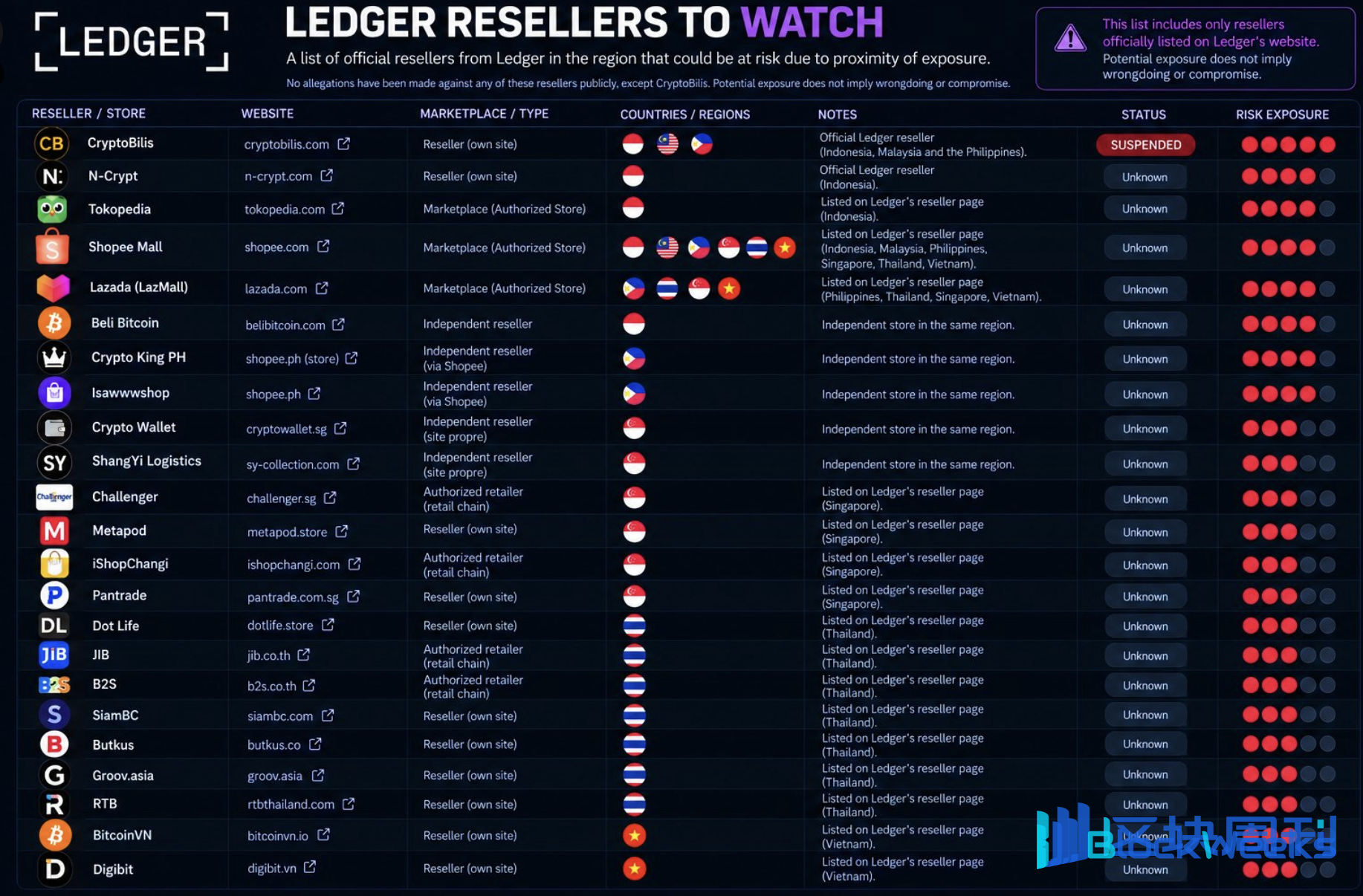
Ledger Devices Found with Implants: How Should Wallet Makers Respond to User Trust?








Tether Backs Peso to Expand USDT Payments Across Four Latin American Countries
Tether led the pre-seed funding round for Bolivian fintech startup Peso, with the amount undisclosed. The funds will be used to expand USDT payment services across Bolivia, Brazil, Colombia, and Argentina, including connecting stablecoin wallets with local bank transfers, QR payments, and merchant POS terminals. Peso has already integrated USDT payments into the Yango delivery platform in Bolivia, allowing users to place and pay for orders directly with USDT. The investment continues Tether's recent push into Latin American payment providers, aiming to embed USDT into everyday spending and cross-border transfers.
 USDTTetherUSDT
21 hours ago
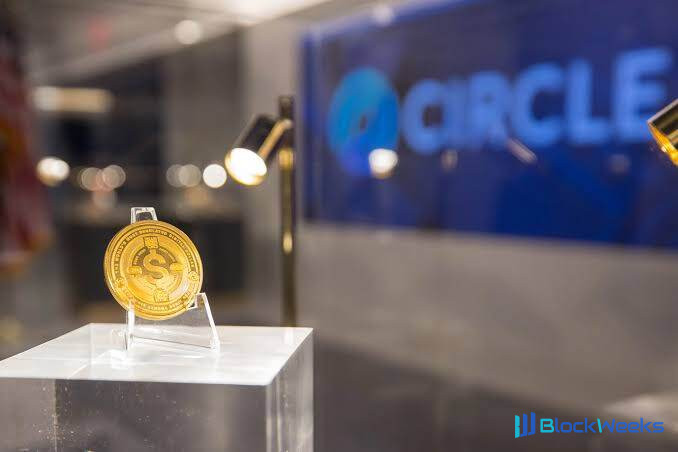
Why Does Circle Keep Only 7 Cents of Every Dollar It Earns?
In this op-ed, Circle's Chief Business Officer Kash Razzaghi responds to questions about how the company splits its revenue. He discloses that Circle brought in about $1.4 billion in the first half of 2026, with $819 million (roughly 59 cents per dollar) going to distribution partners such as Coinbase and Binance, and $473 million (about 34 cents per dollar) spent on compliance licenses, banking relationships, liquidity, and product development—leaving a net profit of just 7 cents per dollar. He argues that free redemptions, global licensing, and liquidity infrastructure are central to USDC's usefulness, and notes that USDC accounts for roughly 77% of global stablecoin transaction volume.
 USDCstablecoin business modelCircleCompliance Infrastructure
2026-10-22

Canada's P2P Crypto Activity Slumps as Student Permit Numbers Drop
Chainalysis research on North America shows Canada's monthly P2P crypto trading volume has fallen from a peak of roughly 650,000 transactions in spring 2024, tracking the decline in study permits for students from India, China, and the Philippines. Official data show new student arrivals from January to August 2026 were down 71% from two years earlier. Chainalysis stresses this is correlation, not causation, suggesting cross-border funding needs tied to immigration as a possible explanation. The piece also notes falling payment-provider transfer costs, local fiat conversion remaining an operational hurdle, and the Philippines' BPI bank testing stablecoin settlement for overseas earnings.
USDTstablecoin settlementstudent permitsChainalysis2026-10-21

Stablecoin Shopping Meets Gacha: SP3ND Plans Randomized Purchases
SP3ND is developing a stablecoin-based gacha-style shopping experience that lets users buy goods on Amazon, eBay and other platforms with stablecoins, with a lottery determining which item they receive. Investor Peter of 1kx predicts the model could expand across consumer goods and spawn a new e-commerce giant worth over $10 billion. The article also notes Collector Crypt's NFT prize-to-USDC redemption mechanism and an FTC settlement involving blind-box products, while pointing out the concept is still in development with no pricing or launch details and mixed community reaction.
USDCStablecoin Paymentsrandomized shoppinggacha mechanics2026-10-21

Shinhan Card and SBI to Pilot Yen Stablecoin Payments for Japan–Korea Travelers
Shinhan Card has signed an MOU with SBI Group's SBI VC Trade and SBI XDC Network APAC to test yen stablecoin payments. The collaboration covers card payments, wallet-to-wallet transfers, cross-border trade settlement, and anti-fraud controls, and is currently at the proof-of-concept stage with no commercial launch date announced. Japan–Korea two-way travel exceeded 10.1 million visitors in the first eight months of 2026, and Shinhan Card has roughly 20 million cardholders. The partners will also consider participating in the XDC Network node ecosystem.
USDCCross-border Paymentsproof of concepttrade settlement2026-10-21

Tether Joins Tenstorrent's $1.5B Round as AI Investments Continue to Grow
Tether has announced its participation in a $1.5 billion Series E funding round for AI chip company Tenstorrent, which carries a post-money valuation of $6.2 billion. The round was led by Trace Capital and Innovation X, with participation from ARK Invest, Fidelity, Morgan Stanley, and others. Tether did not disclose the specific investment amount or stake, saying its El Salvador investment arm is responsible for deploying company profits and excess reserves. Tenstorrent plans to use the funds for Galaxy server deployment, AI and CPU design and development, and global expansion. Tether CEO Ardoino said AI should be something people can build, run, and control.
USDTTenstorrentTether2026-10-20

Circle Reported $1.4 Billion in Revenue—Where Did the Money Go?
An analysis of Circle's financials for the first half of 2026: total revenue and reserve income reached $1.395 billion, yet net profit was only about $103 million. Of that, $819.3 million went to distribution, transaction, and other costs, with roughly 59% of revenue flowing to distribution partners—a single strategic distribution agreement alone accounted for $655.3 million. Another $473 million went into licenses, banking, compliance, and product development. The article notes that while USDC's growth drives reserve income, most of the gains must be shared with distribution partners, creating both an advantage and a dependency—and investors need to understand the differences in accounting treatment.
USDCCircleUSDC2026-10-20

Visa Partners with Mesh to Enable Crypto Payments at 175 Million Merchants
Visa has teamed up with crypto payment infrastructure provider Mesh to let consumers pay directly with crypto assets and stablecoin balances at over 175 million merchants across 200+ countries and territories, without needing to cash out to a bank account or apply for a separate payment card. Mesh handles fund transfers and conversions, while merchants still receive payments through Visa's existing acquiring system. Participating platforms can access the service through a single Mesh integration. However, launch timing, supported devices, and initial wallet partners have not yet been announced.
USDCPayment InfrastructureStablecoin Paymentsmerchant adoption2026-10-19

Tether Backs AIsa to Enable Payments for AI Agents
Tether and HIVEN have joined a seed extension round for San Francisco-based AI startup AIsa, bringing its total funding past $9 million. AIsa, which previously raised $6.5 million in July in a round led by Alibaba and Tribe Capital, provides paid data, software tools, and controlled payment services for AI agents. The platform currently supports over 250,000 active agents and has processed 100 million transactions. Tether confirmed the investment but declined to disclose the amount or stake, describing the move as part of its push into AI payments and programmable money.
USDTProgrammable moneyfunding roundAI startup2026-10-18

BIS: Bank Rate Hikes Cut Stablecoin Growth by 3 Points
A BIS working paper examines how stablecoins substitute for bank deposits. Using U.S. weekly data from January 2019 to June 2025, it finds that a 1 basis point rise in bank deposit rates is followed by a roughly 2.8 percentage point drop in stablecoin market cap growth over the next ten weeks. USDC is hit harder, falling about 4.8 points, versus 1.9 points for USDT. Similar substitution patterns appear in bank CDs and DeFi lending, though the study does not show that stablecoin adoption has reduced total U.S. bank deposits or loans.
USDCbank deposit ratesStablecoinresearch2026-10-18