In brief
- The Senate is scheduled to hold a procedural vote on the Clarity Act on September 15.
- Stand With Crypto says supporters called or emailed members of Congress nearly 50,000 times in August.
- Community bankers are lobbying senators over provisions they say could pull deposits from banks and hurt lending.
Crypto advocates and community bankers are taking their fight over the Clarity Act to senators’ home states ahead of a key vote next week.
The Senate is scheduled to hold a procedural vote on the Clarity Act on September 15. The legislation would establish federal rules for digital assets and divide oversight between the Securities and Exchange Commission and the Commodity Futures Trading Commission.
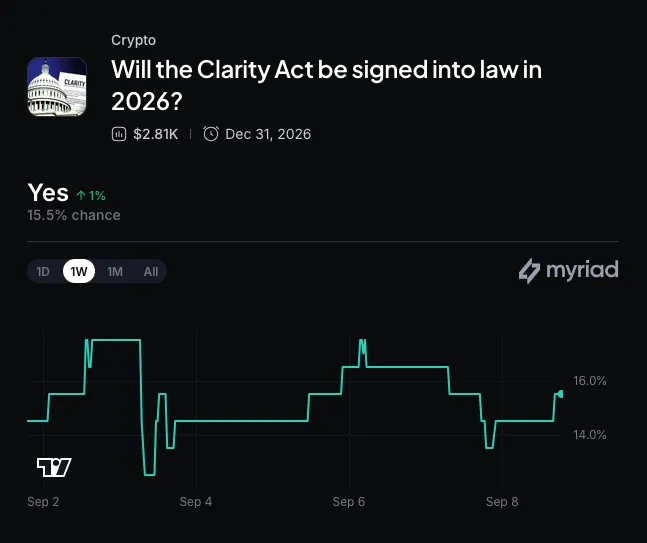
According to a report by Reuters, during the August recess, both sides targeted senators with meetings, local events, op-eds, calls, emails, and advertising.
Stand With Crypto, a Coinbase-backed advocacy group that says it has 3 million supporters, said members called or emailed Congress nearly 50,000 times in August while organizing events and placing pro-Clarity Act op-eds in local newspapers. In Georgia, chapter president Tia Williams met with staff for Democratic Senator Raphael Warnock, who voted against advancing the bill out of the Senate Banking Committee.
Crypto groups have already spent at least $190 million ahead of the November midterm elections.
While the crypto industry has moved to lobby for friendly regulations, community banks are also mounting their own campaign.
The Independent Community Bankers of America has organized meetings between local bankers and senators in their home states and run television ads calling for changes to the bill.
“New ICBA polling demonstrates that small businesses understand firsthand the critical role of community banks in supporting local economies and want to ensure the Clarity Act does not harm this vital source of credit,” ICBA President and CEO Rebeca Romero Rainey said in a statement. “ICBA continues to urge lawmakers to ensure the Clarity Act includes a robust prohibition on stablecoin yield to ensure community banks continue to power $4.1 trillion in total lending activity in local communities nationwide.”
One of the biggest disputes is over stablecoin rewards. Banking groups argue that allowing crypto platforms to pay rewards on stablecoins could draw deposits away from traditional banks.
Crypto firms argue that stablecoin rewards should remain available and that clearer federal rules are needed for the industry to operate in the U.S. The bill also faces opposition over money-laundering safeguards and ethics restrictions on government officials’ crypto interests.