

Original | Odaily Planet Daily (@OdailyChina)
Author | Wenser (@wenser 2010 )
After more than a month, Pump.fun has once again launched new "assets" to the market—Pre-IPO tokens and paired issuance assets.
Pump.fun's chosen partner this time is PreStocks, which has long been deeply engaged in pre-market assets. The first batch of cooperative assets between the two parties covers 8 well-known companies: OpenAI, Anthropic, Anduril, Neuralink, Figure AI, Kalshi, Polymarket, and Oura.
In the battle for pricing power over pre-market assets, although it is a few steps behind Perp DEX and CEX, Pump.fun has ultimately formally joined this battlefield. From this, we can also get a glimpse of the current competitive landscape and trends of crypto trading platforms: staying in a corner is a thing of the past; an all-asset, one-stop trading network is the future. (Recommended reading:"Revitalizing the Solana ecosystem, Pump.fun enters coin-stock Meme pairing")
Pump.fun teams up with PreStocks: opening a window for pre-market asset trading, racing to seize asset pricing power
First, from the asset perspective, what Pump.fun selected this time are the more popular unlisted company stock assets on the PreStocks platform that are related to the hottest tracks, hotspots, and figures of the moment. The categories are as follows:
- OpenAI, Anthropic: AI giants;
- Anduril: defense hard-tech unicorn;
- Neuralink: Musk's brain-computer interface company;
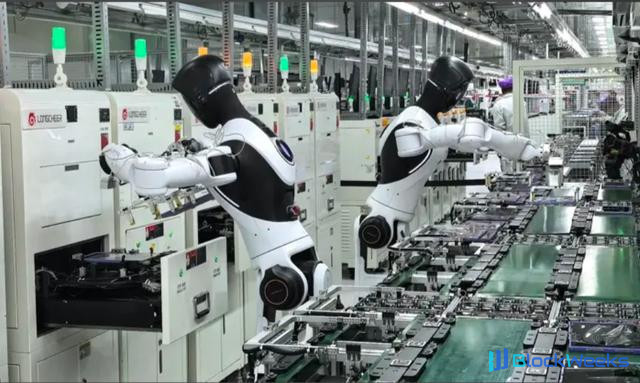
- Figure AI: humanoid robot giant;
- Kalshi, Polymarket: the duopoly in prediction markets;
- Oura: smart ring unicorn, the rising star of the big health track, about to IPO.
There are far more types of pre-market assets on the PreStocks platform than these 8, but these 8 major pre-market token assets are the "high-potential value targets" carefully selected by Pump.fun.
Second, from the perspective of asset attributes, the relevant stock (equity) tokens on the PreStocks platform are not equivalent to holding actual equity in the corresponding companies. In other words, such pre-market assets only provide economic exposure and do not grant holders stock ownership, voting rights, dividend rights, or information rights.
In addition, the collateral for such pre-market assets includes interests in SPVs (special purpose vehicles), funds, and custody arrangements; derivative/synthetic arrangements; cash, stablecoins, or other tokens. Therefore, their market prices may deviate significantly from the true valuation of the corresponding company's equity/stock or other markets.
Finally, from the perspective of asset compliance, these pre-market assets are not open to users in the United States and other jurisdictions. To some extent, this is also to avoid conflicts with the U.S. SEC-related "innovation exemption rules and TSV trading platform regulations."
In summary, Pump.fun's opening of trading in 8 major pre-market token assets and the issuance of paired assets can, on the one hand, connect more tradable assets and enrich the platform's asset types; on the other hand, it can also use the fees generated by paired tokens to fund PUMP token buybacks, further feeding back into the PUMP ecosystem and platform development. In addition, what is worth discussing is the "cooperation model" mentioned at the beginning of the article.
When crypto projects upgrade into "trading networks": behind the growing value of entry points, self-operated and cooperative models diverge
Looking back at the "RWA asset trading narrative" of the past 2 years, a clear trend is that the value of trading entry points is gradually rising. Hyperliquid, Pump.fun, and many CEXs are step by step transforming from standalone trading platforms into "trading networks" spanning multiple asset types such as crypto assets, traditional financial assets, and pre-market stock tokens by connecting emerging assets and partnering with platforms.
Behind Pump.fun's integration of 8 major pre-market assets from the PreStocks platform this time, it can also be seen as a sequel to its previous integration of stock token assets with xStocks and Sunrise; and unlike CEXs such as Binance, Bybit, Bitget, and Gate, which choose a self-operated model, that is, packaging relevant RWA assets themselves and opening trading services on their own platforms, emerging crypto platforms represented by Hyperliquid and Pump.fun choose to participate in market competition through a "cooperation model"—
Hyperliquid chooses to build its own underlying infrastructure, and then uses HIP-3 and HIP-4 to attract projects within the ecosystem to participate in building on-chain derivatives trading platforms and prediction market (outcome trading) products;
Pump.fun chooses to enter from the perspective of product integration, cooperating with platforms such as xStocks, Sunrise, and PreStocks, which are relatively small in scale but have mature mechanisms and products in RWA assets and pre-market assets, gradually transitioning from its original "Meme coin launch platform" and "Meme coin trading platform" to the ideal "internet trend trading platform."
As a result, the value of entry points and front ends has been greatly enhanced. After all, users and the market accumulate here, and for crypto projects with token buyback mechanisms and fee income, this is precisely where their advantage lies.
On the path toward an "all-asset, one-stop trading network," just like e-commerce platforms in the past, the self-operated model and the cooperative model may become the two main forms for crypto projects: the former is operation-heavy and is often the main battlefield for CEXs with large amounts of capital accumulation and user bases; the latter focuses more on asset types and innovative gameplay, and is the key track for rising stars such as Hyperliquid, Pump.fun, and fomo.
But no matter which route is chosen, one conclusion is becoming increasingly clear:Whoever controls the entry point controls the future of the crypto market.