
“搵食啫 (just trying to make a living).” Three simple words, said lightly, but behind them is often a whole day of rushing about. This is where Hong Kong people's charm lies: clearly busy beyond belief, yet still able to find a moment to crack a joke; clearly a bit bedraggled, yet determined to keep some composure. The so-called “抵死 (witty, wickedly funny)” is sometimes just seeing through life's difficulties but refusing to let them completely get the upper hand. A “唔紧要 (never mind)” doesn't necessarily mean things are really fine; sometimes it's just about settling your mood first and carrying on. This tone—knowing how to laugh at yourself, and knowing how to leave each other a little room—is closer to Hong Kong than any postcard.
This character has its origins. The port brought people from north and south; after the war, migrants, capital and skills found footholds in tong lau, factories and industrial buildings. Garments, plastic flowers, toys, watches—one by one, “Made in Hong Kong” goods went from cramped spaces out into the wider world. When great eras land on ordinary people, it's going to work, paying rent, supporting a family, taking things one step at a time, and constantly finding a way. Hong Kong's creativity has often grown out of this kind of daily life. This history need not be polished into a legend of one success after another. Within it there is hardship endured, and there are ordinary people unwilling to merely follow the script, so they try to make something a little different.
In 1972, Below the Lion Rock turned its lens on the resettlement estates of Wang Tau Hom, viewing society through one family's daily life. The Lion Rock Spirit so often invoked later, if reduced to nothing but an inspirational slogan, makes it easy to forget the people below the mountain who had tempers, difficulties, and also warmth. That same year, Liu Yichang's Intersection began serialization, letting two characters walk similar streets—one looking back at the past, one imagining the future. The same Hong Kong, it turns out, can hold very different times at once. To know Hong Kong, one must make room for different people's ways of telling it.
So nostalgia is fine, but creation need not stop at nostalgia. The old shop signs, movie advertisement paintings and golden oldies are worth keeping and looking at closely; the new situations people face today are also worth being drawn and sung. If we only replay the previous generation's famous scenes, we hear less of this generation's own voice.
meme@HK, initiated by ULTIMEDIA and ULTILAND, wants to hand this space for storytelling to today's creators. Hong Kong's forte, besides the classics, is the ability to use classics in new ways. A Cantonese phrase can “食字 (play on a homophone)”; a familiar scene can be seen from another angle; a stretch of life that was originally quite serious can suddenly turn 鬼马 (zany). Images, music, short videos, text, original characters—the form is yours to choose; AI can help, or you can do without it entirely. Most important is that the work contains your own point of view. Those who get the punchline will recognize the unspoken understanding; those unfamiliar with Hong Kong can also start from the works and gradually come to understand where it all comes from.
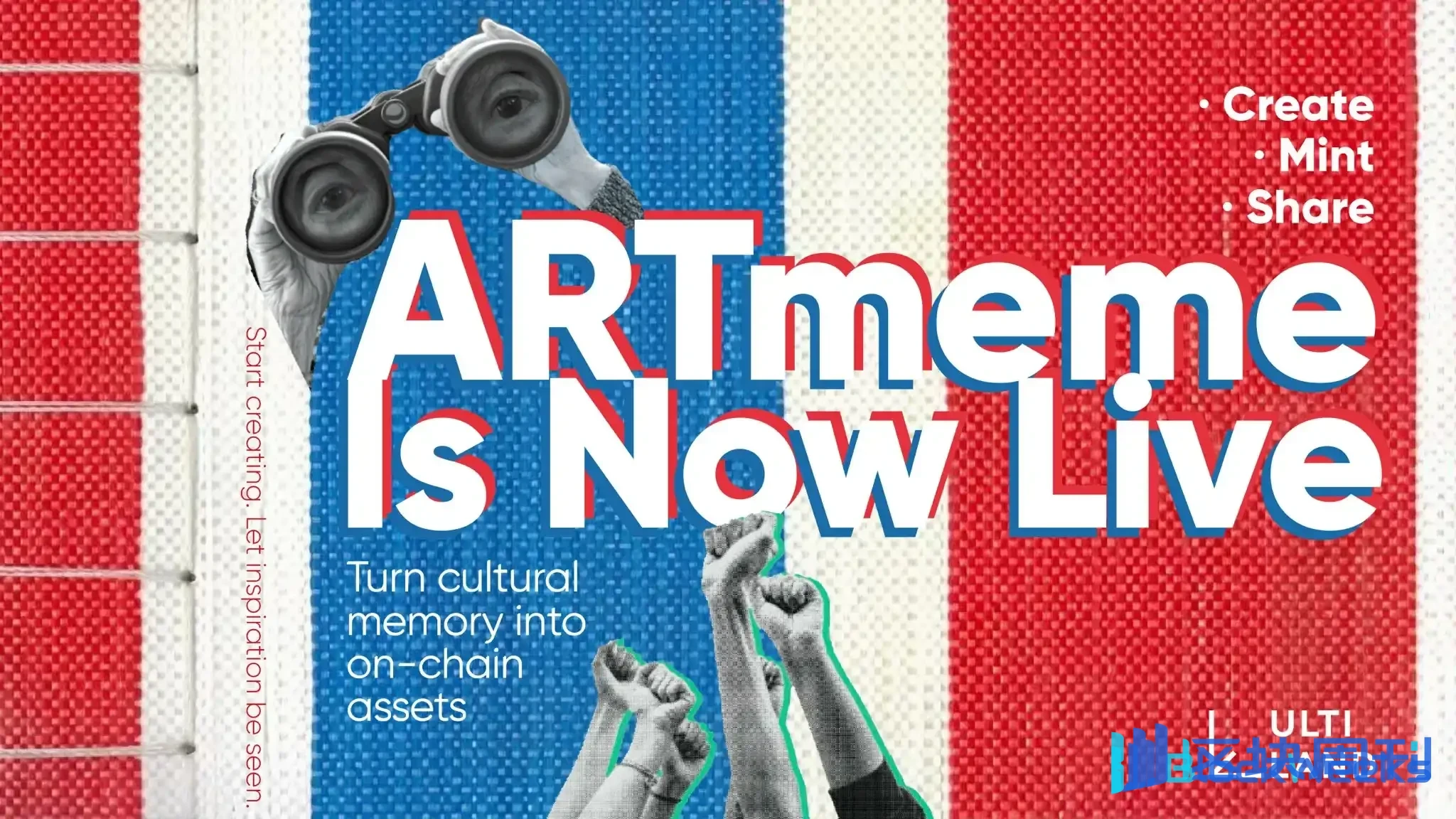
The planned Meme Gallery | City Culture On-Chain Chronicle will organize creative threads from urban history, street life and popular culture, so that new works know where they come from and have a place to be kept. Participants can issue ARTmeme through ULTILAND, linking works with on-chain issuance records; related commemorative NFTs offer another way to discover and collect works according to interest. On-chain records preserve the record; creation preserves the meaning. Both must hold together for it to be worth doing.
The Federation of Hong Kong Design and Creative Industries (FHKDCI) has become an important supporting partner of meme@HK. The two sides will advance cooperation around cultural-themed creation, work provenance, nurturing young creators, and salons and physical exhibitions. Designers, filmmakers, painters, and those familiar with internet culture and on-chain creation may not speak the same language at first; but as long as there is work placed in front of them, there is something to talk about. Starting from a single sharing session or a single exchange, perhaps collaborations never before imagined will be found. Letting the previous generation's craft meet young people's new ways of playing is more interesting than writing “inheritance” on a poster.
Those interested in participating can first visit the ULTILAND official Discord or the meme@HK channel on Telegram to learn about the plan and rules. There's no need to rush to define the whole of Hong Kong. A small thing you remember, a tone of voice you can recognize, the story you've always felt is worth telling—any of these can be a starting point. The previous generation turned Hong Kong into films, songs, novels, and also into goods shipped across the oceans. This time, it's your turn to hand in a work. 香港仲有新嘢 (Hong Kong still has new things)—waiting for you to make them.