
Unrealized PnL is the profit or loss on a position that is still open. Realized PnL is the profit or loss that becomes final after part or all of a position is sold or closed.
What unrealized PnL is
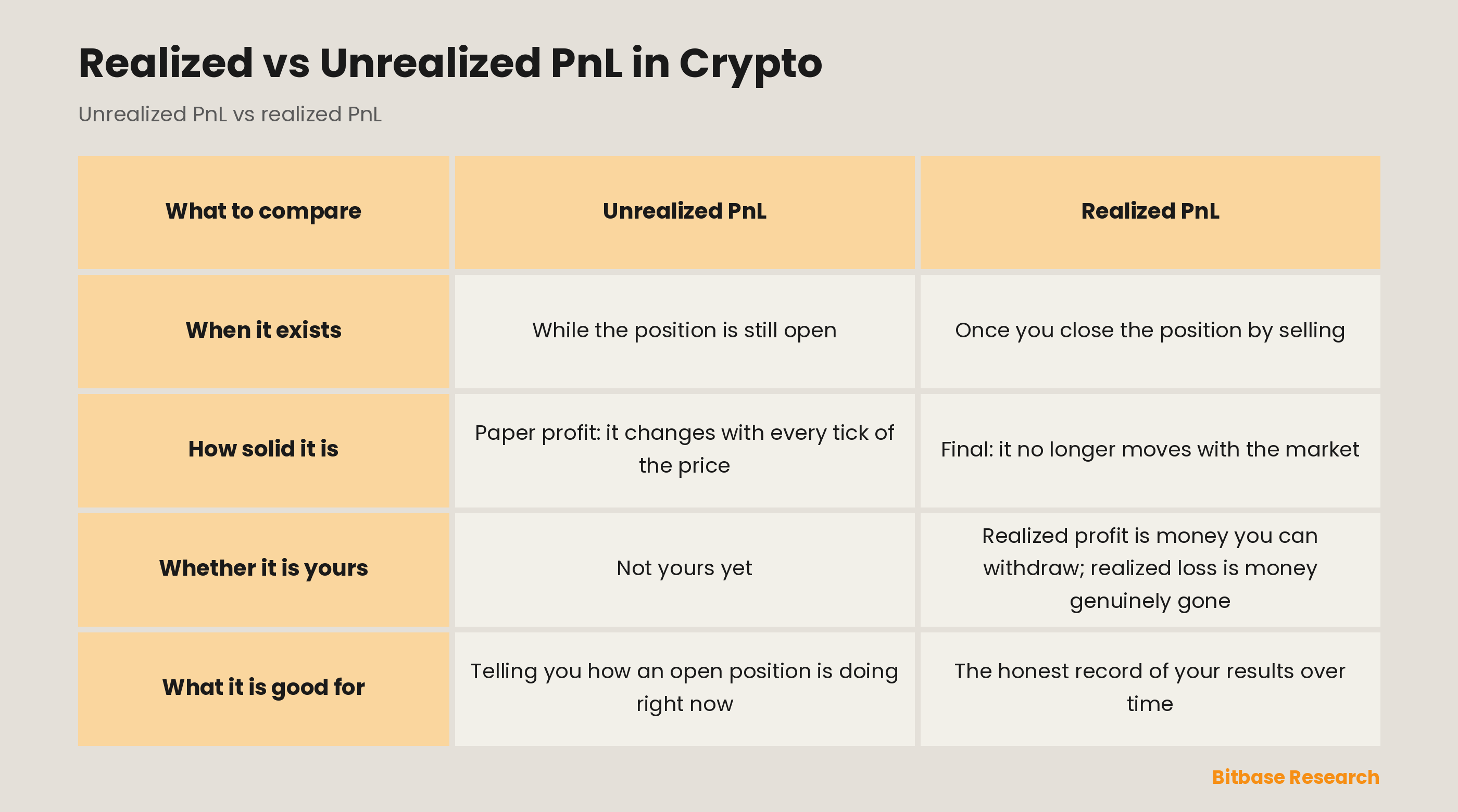
Unrealized profit and loss is the gain or loss on a position you still hold. If you bought a coin at one price and it now trades higher, you have an unrealized profit; if it trades lower, an unrealized loss. It is often called paper profit because it exists only on paper. The number is real in the sense that it reflects the current market, but it is not yet yours — it changes with every tick of the price.
What realized PnL is
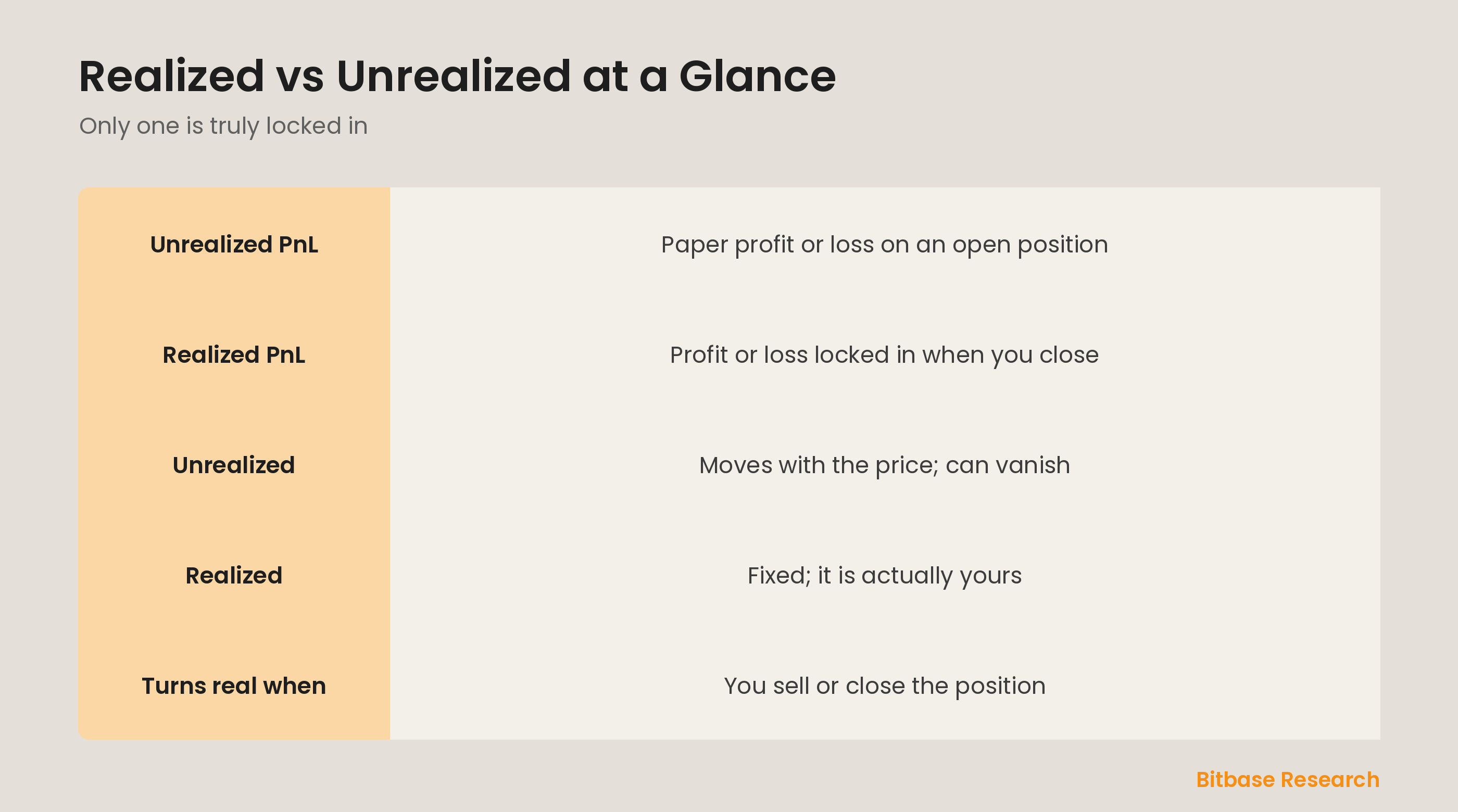
Realized profit and loss is what you actually keep or lose when you close the position by selling. The moment you sell, the price is locked in and the result becomes final — that is your realized PnL. Unlike the unrealized figure, it no longer moves with the market. Realized profit is money you can withdraw; realized loss is money that is genuinely gone.
Why the difference matters
The gap between the two is where many traders trip up. An unrealized profit can grow, shrink, or disappear entirely before you sell — a position that was up sharply can turn into a loss without you ever having taken the gain. Treating paper profit as though it were already banked leads to overconfidence and poor decisions. Only realized PnL reflects what actually happened to your money.
Using both wisely
Both numbers are useful when read correctly. Unrealized PnL tells you how an open position is doing right now and helps you decide whether to hold or close. Realized PnL is the honest record of your results over time. Good traders watch the unrealized figure without mistaking it for cash, and judge their performance by what they have actually realized — because a profit is only real once it is closed.
An example
You buy 1 ETH at $2,000. If ETH rises to $2,500 and you still hold the full position, your unrealized PnL is +$500 and your realized PnL is $0.
If you then sell 0.5 ETH at $2,500, the realized PnL on the half you sold is +$250, and the remaining 0.5 ETH still carries an unrealized PnL measured against the current market price.
Unrealized PnL vs realized PnL
The bottom line
Unrealized PnL is the paper gain or loss on a position that is still open; realized PnL is the result you lock in when you close it. The first moves with the market and can vanish; the second is final and truly yours. Keep the two clearly separate, and never count an unrealized profit as money until you have actually realized it. To keep learning the fundamentals, follow more from Bitbase Academy.
Frequently asked questions
What is realized PnL?
Realized profit and loss is what you actually keep or lose once you close a position by selling. At that moment the price is locked in and the result becomes final: realized profit is money you can withdraw, and realized loss is money that is genuinely gone.
What is unrealized PnL?
Unrealized profit and loss is the gain or loss on a position you still hold. It is often called paper profit because it exists only on paper, and it changes with every tick of the price, so the number is real but it is not yours yet.
Does unrealized PnL become realized automatically?
No. It becomes realized only when you close the position, in whole or in part. Until then the figure can grow, shrink or disappear entirely, which is why a position that was up sharply can still end in a loss.
Related reading
Other Bitbase articles on this topic:
- Spot Profit, Cost Basis, and Average Entry
- Cost Basis vs Average Entry Price in Crypto
Disclaimer: This article is educational content from Bitbase Academy, provided for information only. It does not constitute investment, trading, tax, or financial advice. Crypto assets are volatile; assess your own risk. Written as of June 2026; refer to the latest official information.
References
[1] Investopedia, "Unrealized Gain: Definition, How It Works, and Example" investopedia.com
[2] Investopedia, "Realized Gain: Definition, and How It Works Vs. Unrealized Gain" investopedia.com
[3] Investopedia, "Capital Gain: Definition, How It Works, and Taxes" investopedia.com