Why can you swap one USDC for any other, but never one NFT for another? The answer is fungibility, and it is enforced by token standards — the shared rulebooks that let wallets, exchanges, and apps handle millions of different tokens the same way. Here is what those terms really mean.
What fungibility means
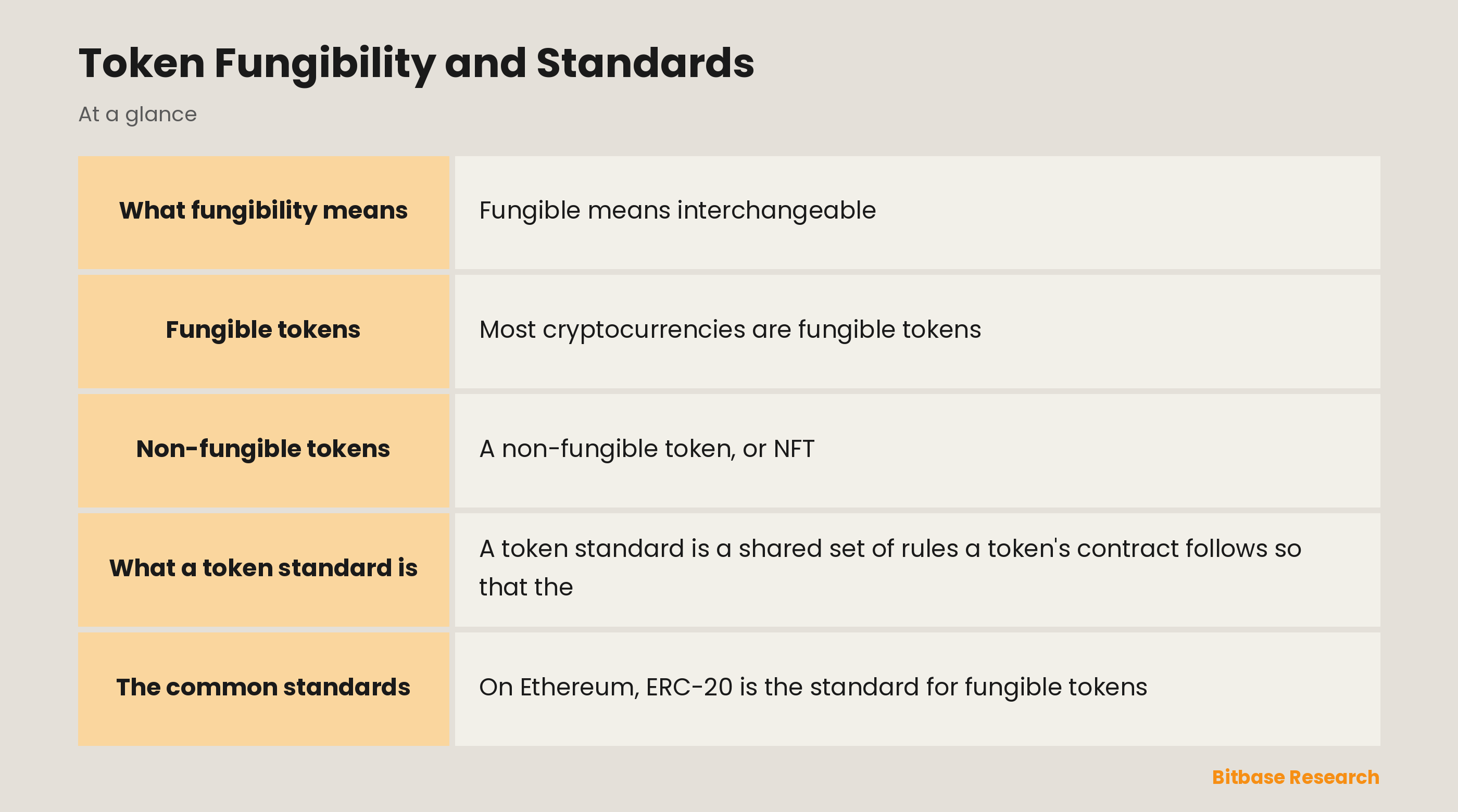
Fungible means interchangeable: every unit is identical and worth exactly the same as any other. A dollar, a share of a company, or one bitcoin is fungible — you do not care which specific one you get. Non-fungible means unique: each item is distinct and not interchangeable, like a concert ticket with a specific seat or a one-of-a-kind piece of art.
Fungible tokens
Most cryptocurrencies are fungible tokens. One USDT equals any other USDT; one unit of a governance token is the same as the next. This sameness is what makes them useful as money and as tradable assets — you can pool them, split them, and price them cleanly, because no unit is special.
Non-fungible tokens
A non-fungible token, or NFT, represents a unique item with its own identity on the blockchain — digital art, a collectible, a game item, or a deed. Because each NFT is one of a kind, they cannot be swapped one-for-one; their value depends on which specific token you hold, not just how many. Fungibility, not price, is the real dividing line between a coin and an NFT.
What a token standard is
A token standard is a shared set of rules a token's contract follows so that the rest of the ecosystem can understand it. Because a token obeys a known standard, any wallet or exchange can support it without custom code. Standards are why you can hold thousands of different tokens in one wallet — they all speak the same language.
The common standards
On Ethereum, ERC-20 is the standard for fungible tokens, ERC-721 defines unique NFTs, and ERC-1155 lets a single contract manage both fungible and non-fungible items together. Other chains have their own equivalents — Solana uses its SPL token standard, for example. The names differ, but the idea is the same: agreed rules that make tokens portable across the whole ecosystem.
The bottom line
Fungibility decides whether a token is interchangeable money or a unique collectible, and token standards are the shared rulebooks that let the entire ecosystem handle both. Knowing whether something is an ERC-20, an NFT, or an SPL token tells you how it behaves, where it can go, and what you actually own. It is the quiet grammar underneath everything you trade.
Related reading
Other Bitbase articles on this topic:
- How to Analyze Tokenomics: A Working Checklist
- What Is DAO Maker? Launchpad Framing and Allocation Models
Disclaimer: This article is educational content from Bitbase Academy, provided for informational purposes only. It is not investment, trading, tax, or financial advice. Written as of July 2026; rely on the latest official information.
References
[1] OpenZeppelin Docs, "ERC-20, ERC-721 and ERC-1155 standards" openzeppelin.com
[2] Coinbase, "Fungible vs non-fungible tokens" coinbase.com