
A blockchain fork is a change to the rules a network follows — a split in its path. Some forks are minor upgrades everyone accepts; others are incompatible changes that can create a whole new chain. This guide explains the main types simply.
Soft forks and hard forks
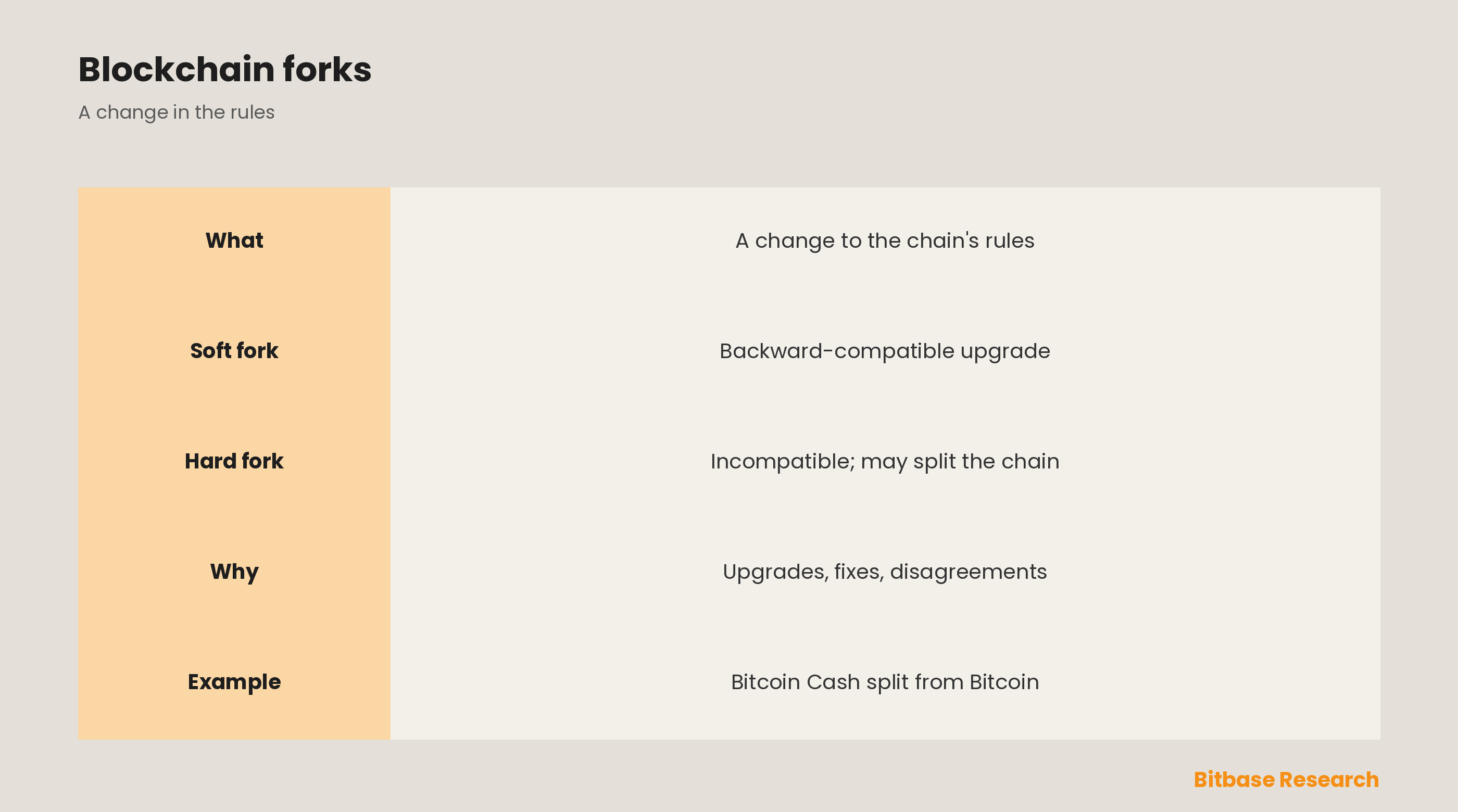
There are two main kinds. A soft fork is a backward-compatible rule change: nodes that don't upgrade still recognise new blocks, so the chain stays unified [1]. A hard fork is an incompatible change: nodes must upgrade, and if part of the community keeps the old rules, the chain can split into two — sometimes creating a new coin [2].
Why forks happen
The bottom line
A fork simply means the network's rules changed. Soft forks tighten rules while keeping one chain; hard forks make incompatible changes that can split the chain and even create a new cryptocurrency, as when Bitcoin Cash split from Bitcoin. Forks are how blockchains upgrade and how communities settle disagreements. To keep learning the fundamentals, follow more from Bitbase Academy.
Related reading
Other Bitbase articles on this topic:
- What Is Ravencoin? Native RVN and On Chain Assets
- Advanced Consensus Mechanisms
Disclaimer: This article is educational content from Bitbase Academy, provided for information only. It does not constitute investment, trading, tax, or financial advice. Crypto assets are volatile; assess your own risk. Written as of June 2026; refer to the latest official information.
References
[1] Coinbase, "What is a fork?" coinbase.com
[2] Investopedia, "Hard Fork vs. Soft Fork." investopedia.com