A DAO (decentralized autonomous organization) is a community-governed organization that runs on a blockchain. It has no central manager; its rules are written into smart contracts and executed automatically by code. This guide explains it.
How it works
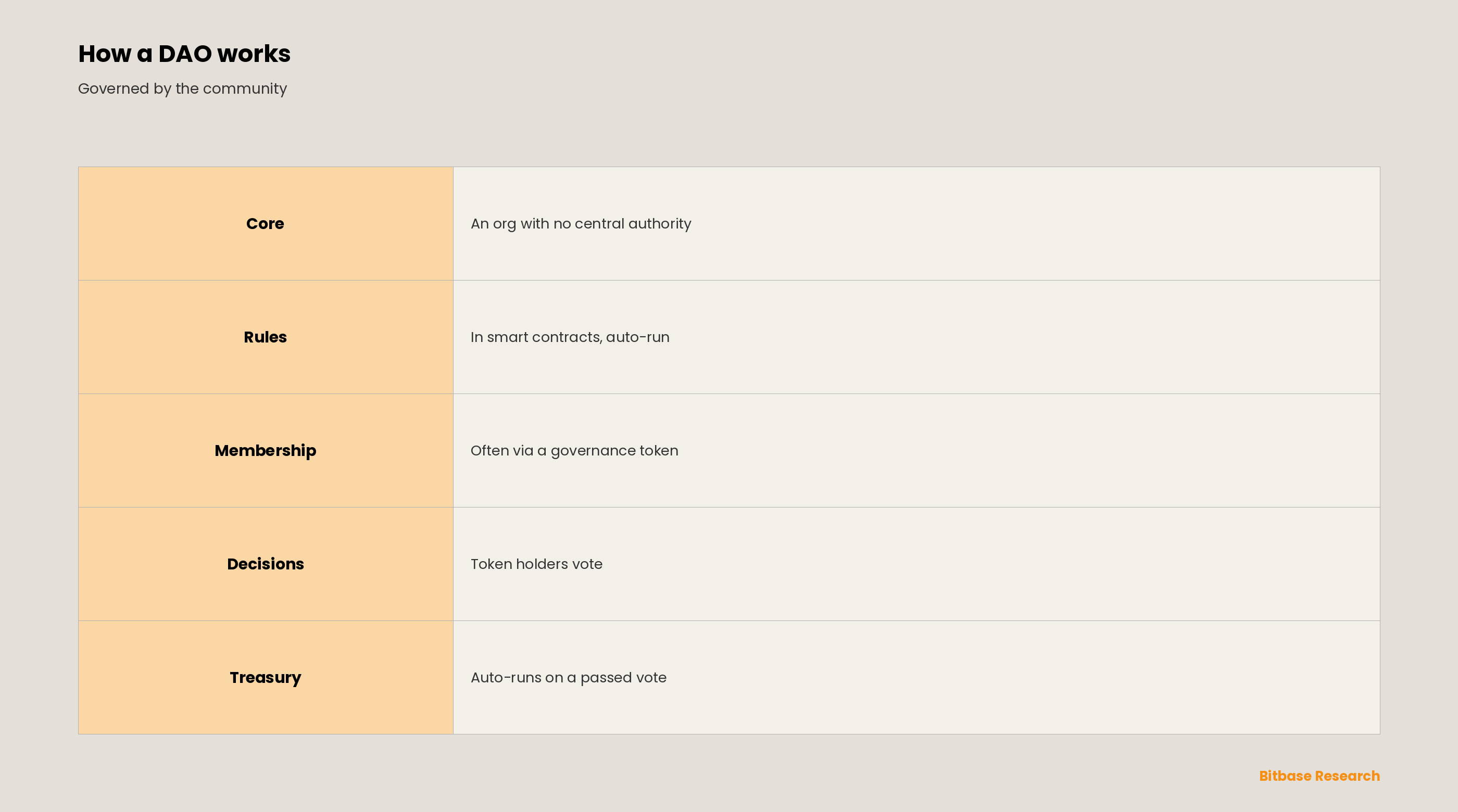
A DAO uses a decentralized ledger — a blockchain — to coordinate the organization and its funds, most commonly for voting and finances [1]. It needs no central authority: the group makes decisions collectively, and when a vote passes, payments are authorized automatically [2].
How a DAO works
Membership and voting
When a DAO is formed, founders often mint a governance token that can grant holders DAO membership and voting power — typically, the more tokens someone holds, the more votes they have [2]. This ties governance to the community, but can also concentrate voting power.
The bottom line
A DAO is an organization governed by community votes, with smart contracts standing in for traditional management. It embodies a decentralized way of collaborating, though its efficiency and fairness are still being worked out. To keep learning the fundamentals, follow more from Bitbase Academy.
Related reading
Other Bitbase articles on this topic:
- What Is Pendle? Yield Tokenization, PT and YT Explained
Disclaimer: This article is educational content from Bitbase Academy, provided for information only. It does not constitute investment, trading, tax, or financial advice. Written as of June 2026; refer to the latest official information.
References
[1] Ethereum.org, "What is a DAO?" ethereum.org
[2] Coinbase, "What are Decentralized Autonomous Organizations (DAO)?" coinbase.com