A dusting attack is when someone sends tiny amounts of crypto — "dust" — to many wallets at once. The goal isn't to steal that dust; it's to analyze the blockchain afterward and try to link your addresses together and figure out who you are, often as a setup for phishing. Here's how it works and what to do.
How dusting works
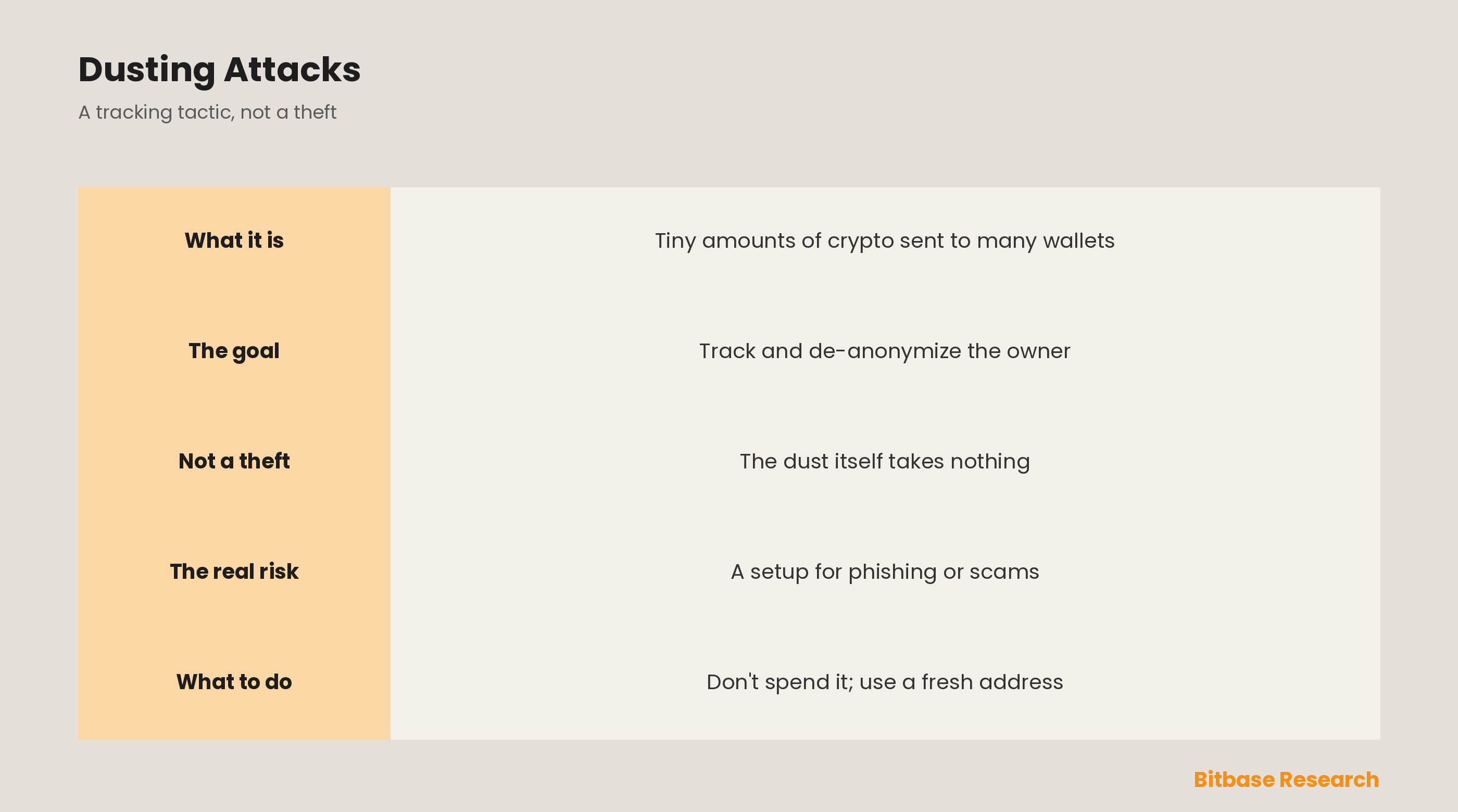
Because most blockchains are public, anyone can send a negligible amount of coin to your address. Attackers dust thousands of wallets, then watch how that dust moves: if you later combine it with your other funds in a transaction, they can start connecting your addresses and de-anonymizing you [1]. The dust itself takes nothing from you — the real aim is to build a profile they can use for targeted scams or phishing [2].
What it means for you
The bottom line
A dusting attack is a tracking tactic, not a direct theft: the tiny deposit can't drain your wallet by itself. The risk is to your privacy, and the follow-up — being targeted by a convincing phishing attempt once someone links your activity. The simplest response is to leave the dust alone rather than spending it, use a fresh address for sensitive transactions, and stay skeptical of any message that seems to know your holdings. To keep learning the fundamentals, follow more from Bitbase Academy.
Related reading
Other Bitbase articles on this topic:
- Meme Coin Risks and Red Flags
- What Is 2FA in Crypto? Two-Factor Authentication Explained
Disclaimer: This article is educational content from Bitbase Academy, provided for information only. It does not constitute investment, trading, tax, or financial advice. Crypto assets are volatile; assess your own risk. Written as of June 2026; refer to the latest official information.
References
[1] Coinbase, "What is a dusting attack?" coinbase.com
[2] Ledger, "What is a dusting attack?" ledger.com