
A pump and dump is market manipulation: organizers inflate a token's price with hype and coordinated buying (the "pump"), then sell into the demand they created (the "dump"), leaving latecomers with losses. This guide explains it.
How it works
A small group accumulates a low-liquidity token cheaply, then promotes it aggressively — social posts, paid influencers, manufactured urgency — to draw in buyers and drive the price up [1]. Once enough new money arrives, the organizers sell their holdings at the inflated price. The price collapses, and those who bought near the top are left with losses [2].
Why low-liquidity tokens
Pump-and-dumps target thinly traded tokens because a small amount of buying moves the price sharply, making the "pump" easy to engineer and the "dump" devastating. The same dynamic makes a recovery unlikely once the organizers exit.
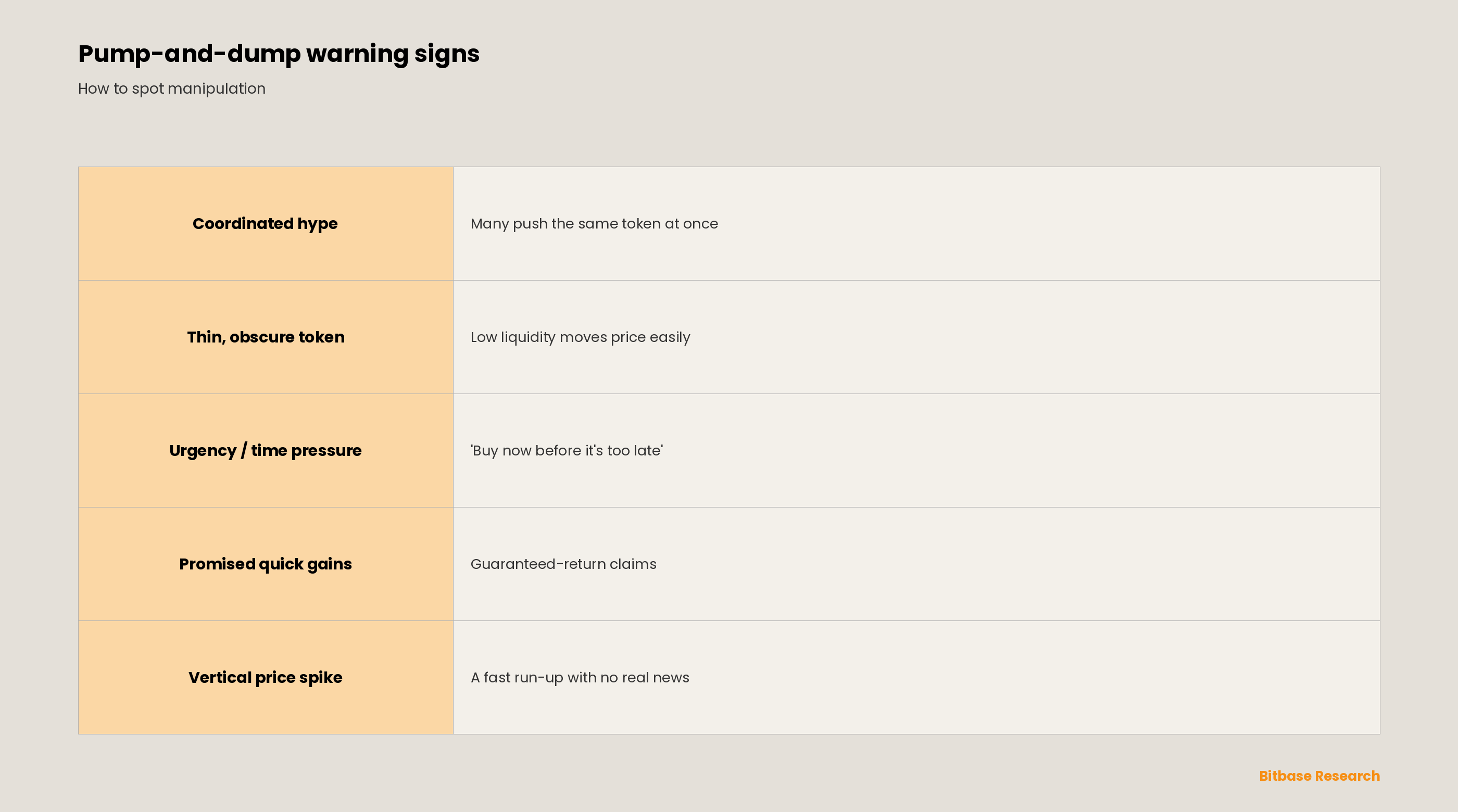
Pump-and-dump warning signs
How to protect yourself
Be skeptical of sudden price spikes paired with coordinated hype, time-pressure messaging, and promises of guaranteed gains. In regulated markets, pump-and-dumps are illegal market manipulation, and they are a frequent crypto scam (see our common crypto scams guide).
The bottom line
A pump and dump inflates a price on hype, then sells into it — by design, latecomers lose. Recognizing the pattern keeps you from becoming someone else's exit liquidity. To keep learning the fundamentals, follow more from Bitbase Academy.
Related reading
Other Bitbase articles on this topic:
- Meme Coin Risks and Red Flags
- Two-Factor Authentication (2FA) for Crypto
Disclaimer: This article is educational content from Bitbase Academy, provided for information only. It does not constitute investment, trading, tax, or financial advice. Written as of June 2026; refer to the latest official information.
References
[1] Coinbase, "What is a pump and dump in crypto?" coinbase.com
[2] FCA, "Pump and dump schemes." fca.org.uk