An ICO, or initial coin offering, is a way to raise funds: a crypto project issues tokens on a blockchain and sells them to investors or users, usually for cryptocurrency or fiat, before or early in the project's development. The terms of an ICO are normally set out in the project's documentation, covering what the token is for, how it is distributed, when it unlocks, and how the funds raised will be used.
How it works
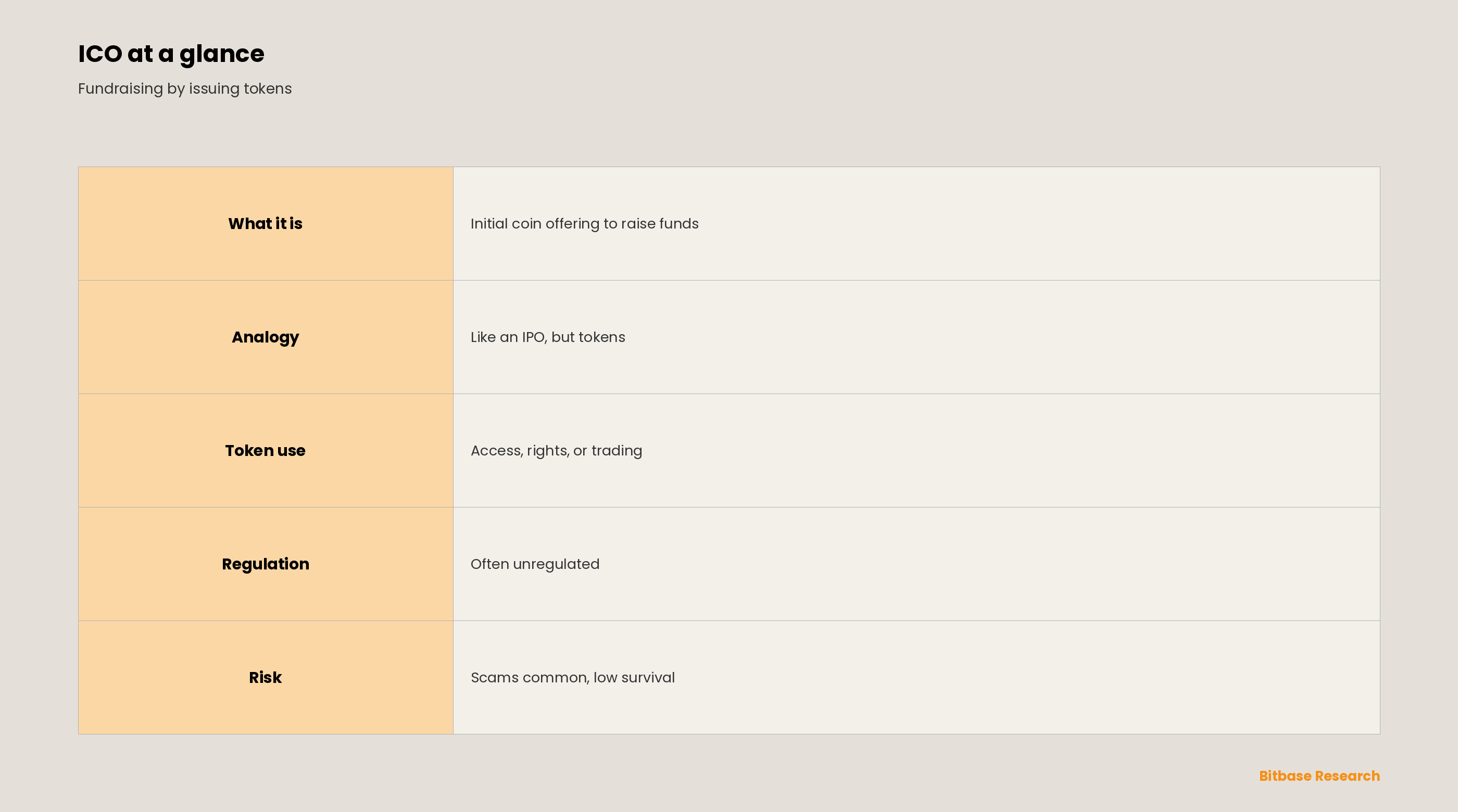
In an ICO, a project issues tokens and sells them to the public in exchange for funds [1]. The tokens may grant access to a product or service, participation rights in a network, or simply function as assets traded on the market [2]. ICOs emerged in the mid-2010s as a way to raise money without traditional intermediaries like venture capital.
ICO at a glance
What to watch out for
ICOs are largely unregulated and high-risk: studies suggest a sizable share of ICOs fail to survive within months of the offering, and regulators have repeatedly warned that some ICOs are used to defraud or mislead investors [1]. Vet the project and team carefully before taking part.
How an ICO Usually Runs
An ICO usually runs in five steps. The project publishes its documentation; it then announces the token sale; the tokens are sold or distributed; vesting and an unlock schedule follow; and finally the token may be listed on an exchange.
The bottom line
An ICO is a way to raise money by issuing tokens, with opportunity and risk side by side and relatively weak oversight. Understanding how it works and its risks helps you view "new coin launches" more cautiously. To keep learning the fundamentals, follow more from Bitbase Academy.
Frequently asked questions
Is an ICO the same as an IPO?
No. Both raise money from the public, which is why an ICO is often likened to a token version of an IPO. The difference is what is sold and under which rules: an ICO issues tokens on a blockchain with relatively weak oversight, while an IPO sells shares in a company under securities regulation.
Does an ICO token get listed on an exchange automatically?
No. An ICO only sells or distributes the token; listing is a separate decision taken by each exchange afterwards. That is why listing sits last in the process above and is described as possible rather than guaranteed.
What should you check before taking part in an ICO?
Start with the project's documentation and the team behind it, because that is where the terms are set out: what the token is for, how it is distributed, when it unlocks and how the money raised will be used. Then weigh the risk level: ICOs are largely unregulated, a sizable share of projects do not survive long after the offering, and regulators have repeatedly warned that some ICOs are used to mislead investors.
Related reading
Other Bitbase articles on this topic:
- What Is a Crypto Whitepaper?
- What Is DAO Maker? Launchpad Framing and Allocation Models
Disclaimer: This article is educational content from Bitbase Academy, provided for information only. It does not constitute investment, trading, tax, or financial advice. Written as of June 2026; refer to the latest official information.
References
[1] Coinbase, "What are Initial Coin Offerings (ICOs) and how do they work?" coinbase.com
[2] The Motley Fool, "What Is an Initial Coin Offering (ICO)?" fool.com